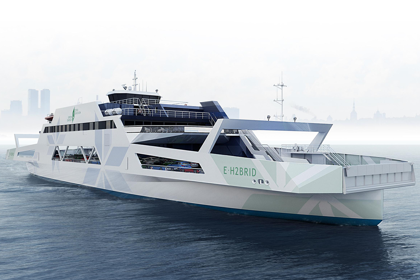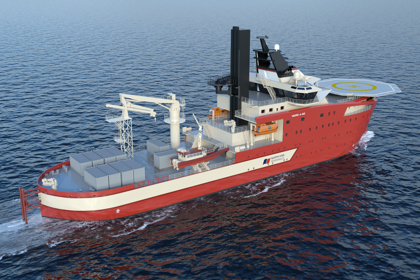



The maritime industry is changing, but our innovative ship design service can help you keep pace. We are at the forefront of innovative ship design, incorporating the latest technologies, materials and design concepts to enhance ship performance, efficiency, safety and sustainability.
Look to the future of ship design
Innovative ship design plays a crucial role in enhancing a ship’s performance, efficiency, safety and sustainability. Today, innovative ship design focuses on low-carbon or zero-carbon alternative fuels to drive the sustainability objectives of the modern maritime industry.
For ship owners, designers and charterers, adopting innovative ship designs comes with challenges beyond significant capital investment. Successfully integrating new, complex technologies are often challenging without specialist expertise. Additionally, there are a significant number of rapidly evolving safety and environmental related standards and regulations to contend with.
At LR, we can support you to navigate the challenges of innovative ship design with confidence. Our global presence and deep industry experience make us a leading adviser and trusted partner for innovative ship design. We are an authority on the development and implementation of innovative ship designs. In addition, our multidisciplinary expertise extends across ship classification, maritime safety and sustainability.
Reduce your impact, optimise efficiency and maximise value
Innovative ship design is driving superior vessel performance and helping meet evolving industry demands. For ship owners, designers and charterers, it’s a vital aspect of increasing competitive edge in today’s market.
New innovations are helping to improve energy efficiency, safety and decarbonisation processes while protecting marine ecosystems and furthering sustainability. This helps to futureproof vessels with enhanced cost-saving potential and protection against increasingly stringent international maritime regulations and standards. For your organisation, it offers a compelling route to add value to products and services for your continued growth.
Your trusted adviser for innovative ship design
LR is committed to furthering innovative ship design for the benefit of our customers, the maritime industry and the environment. As the industry’s trusted adviser, we work to understand our customer’s unique challenges before supporting them with our technical expertise and unrivalled knowledge.
It’s why our technical advisory services, collaboration with maritime stakeholders, research and development, and certification and classification services will provide you with total confidence. From innovative design concepts through to customer support and training, LR is your trusted adviser at every stage of your journey.
How we can support you
New construction services
Expertise and experience
LR is the maritime industry’s trusted adviser for the development and implementation of innovative ship design. We combine our diverse expertise and deep knowledge to deliver unrivalled support in ship classification, maritime safety, and sustainability to support owners, designers, and charterers.
Technical support
Our technical expertise and services help customers to implement complex designs while overcoming challenges and ensuring compliance with regulations. From feasibility studies and risk assessments to engineering solutions, our technical expertise helps to bring safe, efficient, and sustainable ship designs to market, at speed.
Certification and compliance
As a world-leading class society, LR can provide complete assurance for risk management on innovative ship design projects. With our regulatory expertise, you can have total confidence that your innovative ship designs meet all international standards and regulatory requirements across all relevant areas.
Industry collaboration
We actively collaborate with industry stakeholders to uncover new innovations and best practices for our customers. By working with leading research institutions and technology providers, we continue to identify and address common challenges in ship design and operation.