The International Maritime Organisation (IMO) has introduced new requirements for anchor handling winches. They are mandatory under SOLAS Regulation II-1/3-13, as amended by IMO Resolution MSC.532(107), and entered into force on 1 January 2026. (Corresponding requirements for lifting appliances were previously reported in Class News 12/2025). These SOLAS amendments are supplemented by the IMO Guidelines for Anchor Handling Winches (MSC.1/Circ.1662).
Applicability of new requirements
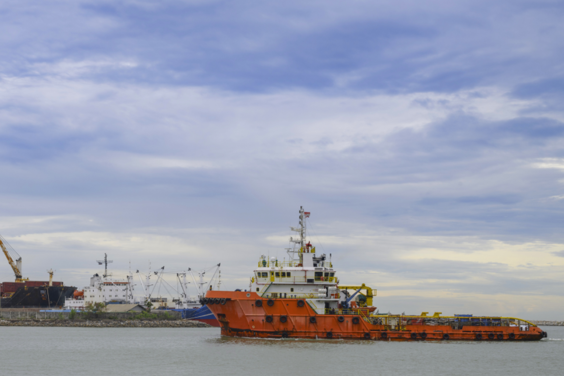
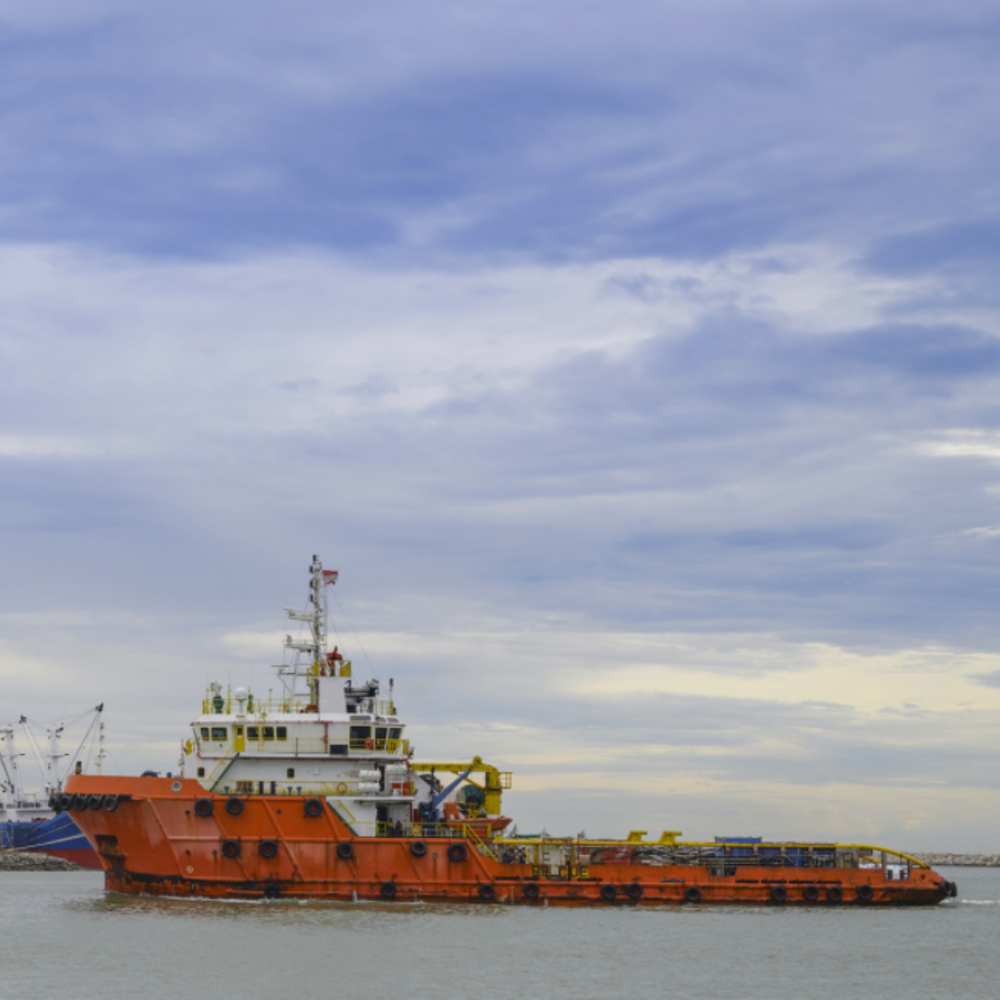
They apply to anchor handling winches, which are defined as “winches used for the purpose of deploying, recovering and repositioning anchors and mooring lines in subsea operations”. These are typically installed on dedicated anchor handling vessels, offshore support ships, and certain tugboats. These winches may be purpose-built for anchor handling or integrated into a towing winch system.
Note: These new requirements do not apply to anchor windlasses, which handle a ship’s own anchors.
Requirements for new anchor handling winches (installed on or after 1 January 2026)
Under SOLAS Regulation II-1/3-13.2.2, new anchor handling winches must comply with the technical requirements specified in the IMO circular and are to be certificated before entering service. Certification includes:
- A plan appraisal of the anchor handling winch and foundation connections
- Verification of materials
- Survey, testing and examination during fabrication
- Verification of component certificates, including its loose gear
- Overload brake holding capacity (BHC) test at 110% of BHC (calculations may be accepted if testing is impractical)
- Overload testing to 110% of maximum line pull (MLP)
- Testing and thorough examination when installed on board.
These new requirements will be incorporated under new Section 10 Anchor handling winches, associated equipment and loose gear in Lloyd’s Register (LR) Rules and Regulations for the Classification of Ships, Part 4, Chapter 4.
Requirements for new anchor handling winches (installed on or after 1 January 2026)
Under SOLAS Regulation II-1/3-13.2.5, existing winches must undergo testing and thorough examination in accordance with IMO guidelines.
Although the IMO guidelines permit acceptance of certification under another international instrument approved by the Administration, there have been no previous class requirements specifically for anchor handling winches. In some cases, LR certification may still be available on board, covering aspects such as structural appraisal, foundations and brake holding capacity, which can support compliance.
The International Association of Classification Societies (IACS) is expected to standardise survey and testing requirements, LR will apply the following for existing installations:
- Document review, including verification that maintenance and operations manuals are available on board
- Survey of winch structure, foundations and supporting structure
- Survey of wires and loose gear
- Survey of hydraulic systems, control stations and electrical arrangements
- Operational testing, including alarms and safety functions
- Overload brake holding capacity test at 110% of BHC (calculations may be accepted if testing is impractical)
- Overload testing to 110% of maximum line pull (MLP)
- Thorough examination after completion of overload tests.
These requirements must be verified no later than the first Cargo Ship Safety Construction Renewal Survey conducted on or after 1 January 2026. A suitable note will be raised on a ships record.
Maintenance, operation, inspection and testing for all anchor handling winches
Under SOLAS Regulation II-1/3-13.3, all anchor handling winches, associated equipment, and loose gear must be operationally tested, thoroughly examined, inspected, and maintained in accordance with IMO guidelines.
Shipowners and operators must:
- Follow manufacturer recommendations, industry standards and operational profiles
- Include winches in the onboard maintenance program
- Ensure maintenance and operational manuals are available (or reconstructed per IMO guidelines if missing)
- Confirm personnel are properly qualified and familiarised with equipment.
Records of thorough examinations
Although no prescribed register booklet exists (as for lifting appliances), IMO guidelines require thorough examination and testing records to be legible, complete, and authenticated by a competent person. LR will issue its own forms upon survey completion and recommends these be kept in a dedicated folder as documentary evidence.
For further information
If you would like to know more or need support with these requirements, please contact Lloyd’s Register Global Technical Client Care via TechnicalExperts@lr.org or access the LR Client Portal.