


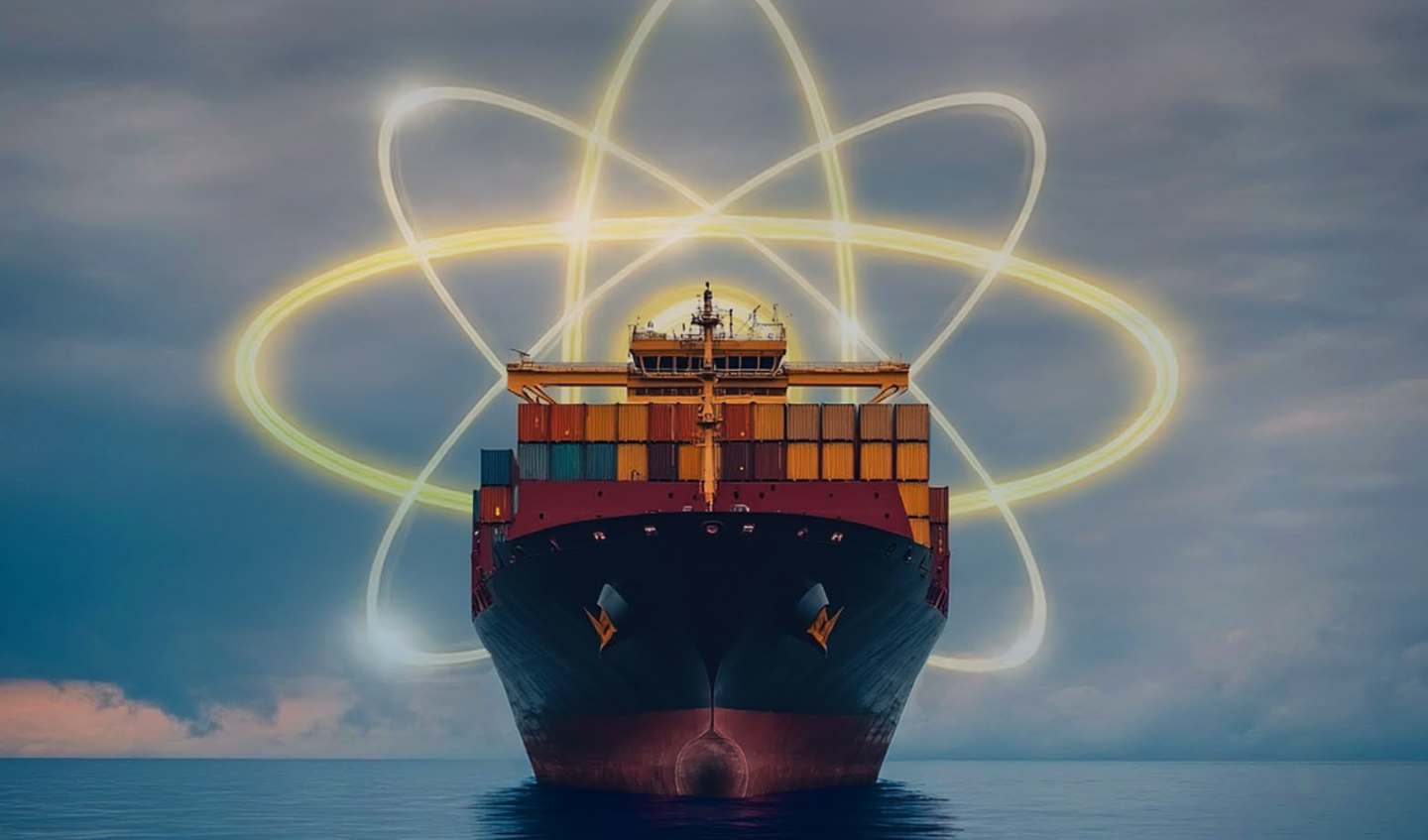
The first day of London International Shipping Week coincided with the announcement of a UK-US bilateral agreement on licensing for small modular reactors, and at a Fuel for Thought briefing on nuclear power later that week, experts gathered at LR’s recently reopened headquarters to debate whether the path to reactor-powered commercial shipping lay in such bilateral agreements or through international treaties.
Nuclear is growing in appeal in the commercial shipping sector because of its applications in zero-emission propulsion and in the production of zero-emission e-fuels. LR’s Global Power to X Director and Nuclear Energy in Maritime Organisation director Mark Tipping reflected that two years ago the subject was barely on the agenda amongst the regulatory, legal and insurance stakeholders represented at the event. Now it is a significant action item for them all, he said.
As an example, International Atomic Energy Association (IAEA) director general Rafael Grossi told delegates by video presentation about its new programme, Atomic Technologies Licensing for Applications at Sea (ATLAS). Working with LR and IMO among other stakeholders, ATLAS aims to promote efficient licensing by contributing to legal frameworks, regulatory practices, safeguards and roadmaps. He urged wider participation from UN member states and commercial stakeholders and expects initial outcomes in around two years.
The IMO, meanwhile, has initiated an update of its non-mandatory Nuclear Code, with first discussions of submissions to take place in January 2026 at the organisation’s sub-committee on Ship Design and Construction. IMO technical officer on maritime safety Ricardo Battista said the organisation is awaiting proposals on base texts and agreement on the full roadmap, which will include deciding whether to make the revised code mandatory.


Revisiting regulations
With the first commercial floating nuclear power plants anticipated in 2030, and the first nuclear commercial ships in 2032, there is an urgent need for policy frameworks. Paul Fyfe, Senior Director at the UK Office of Nuclear Regulation, suggested that consensus forums such as IAEA and IMO may not be the fastest route to such developments, and that bilateral agreements may offer a more efficient, expedited approach.
One form of bilateral agreement, nuclear corridors, was the subject of a second panel. Core Power Group Head Market Development, Baroness Charlotte Vere, said that while US-UK collaboration could drive billions of dollars of investment in land-based applications, it could be worth even more at sea.
Decarbonisation is just one element driving interest, she said, citing national security, energy security and fleet efficiency among several contributing factors. But regulations represented the biggest risk, leading to the need for nuclear corridors.
Several speakers noted that the absence of regulation would not deter first movers, which would also contribute to regulatory development, but a framework was needed to encourage wider uptake. One such early adopter, Dutch offshore and heavy lift operator Allseas, is in the process of developing its own technology – a 25MW electric reactor for large vessels that will be built and tested for land applications first, ahead of marine deployment from 2032.
Scaling reactor concepts
Allseas Project Manager Nuclear Developments, Stephanie Heerema, explained how the company had begun developing a reactor when it could not find a maritime-ready design. It is now in the process of scaling the concept, which she suggested could have a conservative target market of around 10,000 large vessels.
Those vessels will need somewhere to dock, but current port regulations might make that challenging, said ABPmer Senior Maritime Consultant, Richard Vaughan. ‘Current’ may be a misnomer for the 1847 legislation that still governs UK ports facilities, and while provisions are in place for emergency berthing of nuclear submarines, operators will look to regulators to see whether they need new powers and responsibilities to handle commercial nuclear vessels.
Insurance also needs serious consideration, particularly given the likelihood of new ownership structures for nuclear ships. North Standard P&I Head of External Affairs, Mike Salthouse, noted that nuclear reactors and vessels would likely be financed, funded and owned separately, while the fuel source and decommissioning would also need careful consideration.
“Our insurance models don’t really work for the risks shipping will need to assume,” Salthouse said. “We need to understand those, communicate them to our customers and our own insurers, and work out how to price them at a cost-effective level.”

The challenges may be significant but are increasingly being addressed. In his keynote speech, LR CEO Nick Brown (pictured below) noted that the industry could build on over 70 years of successful operations of more than 700 naval reactors, outlining a roadmap that will see port reactors and floating nuclear plant pave the way for a new wave of nuclear-powered commercial shipping. A key takeaway for the audience was that all these facets of nuclear in maritime were now being looked at, developed and scrutinised.

Navigating the regulatory and public landscape
Achieving international alignment on safety, liability, and public understanding will be essential to bring nuclear power to the commercial fleet explains Jez Sims, LR's Technical Authority for Nuclear (pictured below)
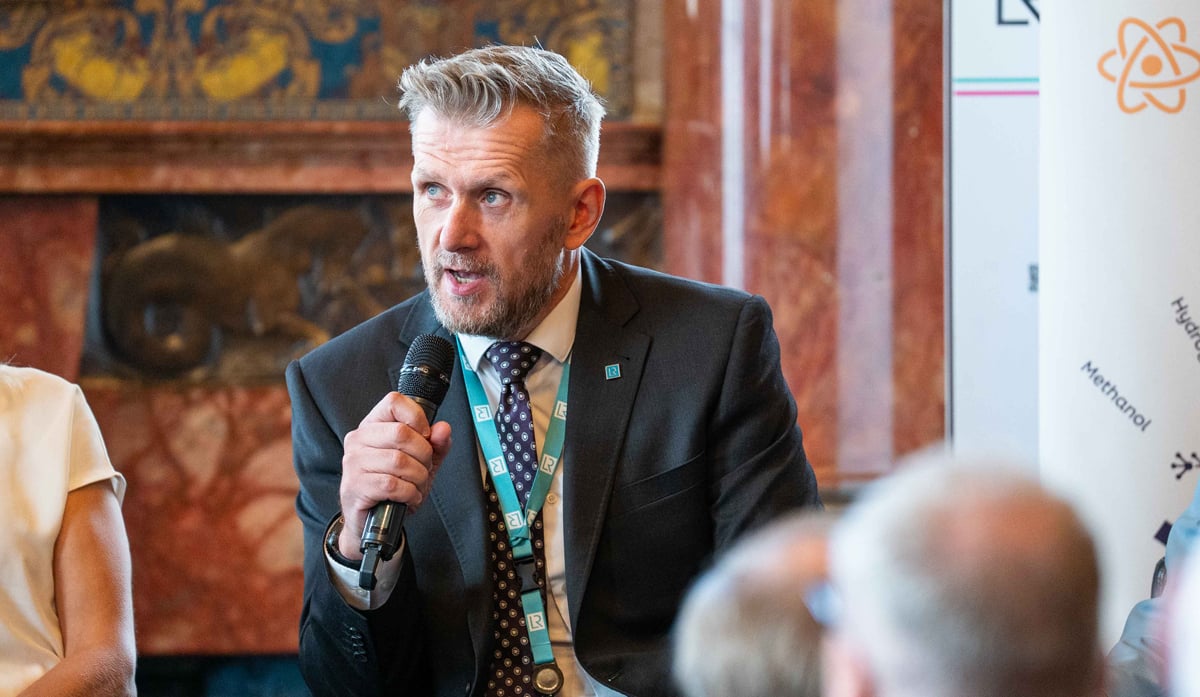
Existing nuclear liability conventions like the Paris and Vienna conventions consider nuclear to be land-based. The challenge around civil maritime nuclear is its global nature, needing a specific solution to address insurance and legal questions. It’s not just about whether the UK or any other country could build a civil nuclear ship and licence it – absolutely we could. The question is, what do you do with that asset? Where can it go? Where can it operate?
This is why we need a globally accepted framework and where the IMO and IAEA come in. The IMO regulates the safety of shipping, while the IAEA’s mandate is safeguarding nuclear materials for non-proliferation. Nuclear safety and security remains a sovereign responsibility.
So, the challenge is producing an internationally agreeable framework that works across these boundaries. There are already memorandums of understanding between the US, Canada, and UK to harmonise nuclear power plant standards, with the goal of standardising approvals, which can be extremely lengthy.
There is a Code of Safety for Nuclear Merchant Ships, SOLAS Chapter 8 and IMO A491, developed in the 1980s and is very prescriptive but tied to technologies of the past. It needs to be updated to be technology–agnostic.
But the big regulatory piece isn’t just about revising this nuclear code but reviewing it against every other SOLAS chapter updated since 1981, to make sure they all align. Which will take significant and effort.
Beyond regulation, the real challenge is not that we can produce civil nuclear ships – we can. The real challenge is moving to mass adoption in an economically viable way which means aligning the supply chain, regulatory pathways, international legislation and decommissioning, while addressing insurance, liabilities, and public perception.
Public perception will be key.
Small reactors can be used for offshore nuclear and e-fuel production, but if you want to bring a nuclear ship into port, you’ll need to demonstrate that it’s safe, so there needs to be an engagement and education piece turning the nuclear narrative around to focus on its green and safety credentials. The same is true for decommissioning – the public will need to be assured that the end of reactor life can be managed safely.
Part of the public perception will be dependent on its economic benefits. The maritime sector will need to train a generation of engineers with specialised nuclear qualifications – this presents challenges to both the maritime and nuclear industries, and the UK has recently launched 'Destination Nuclear' to highlight new roles and get more people into the industry.

