Challenge
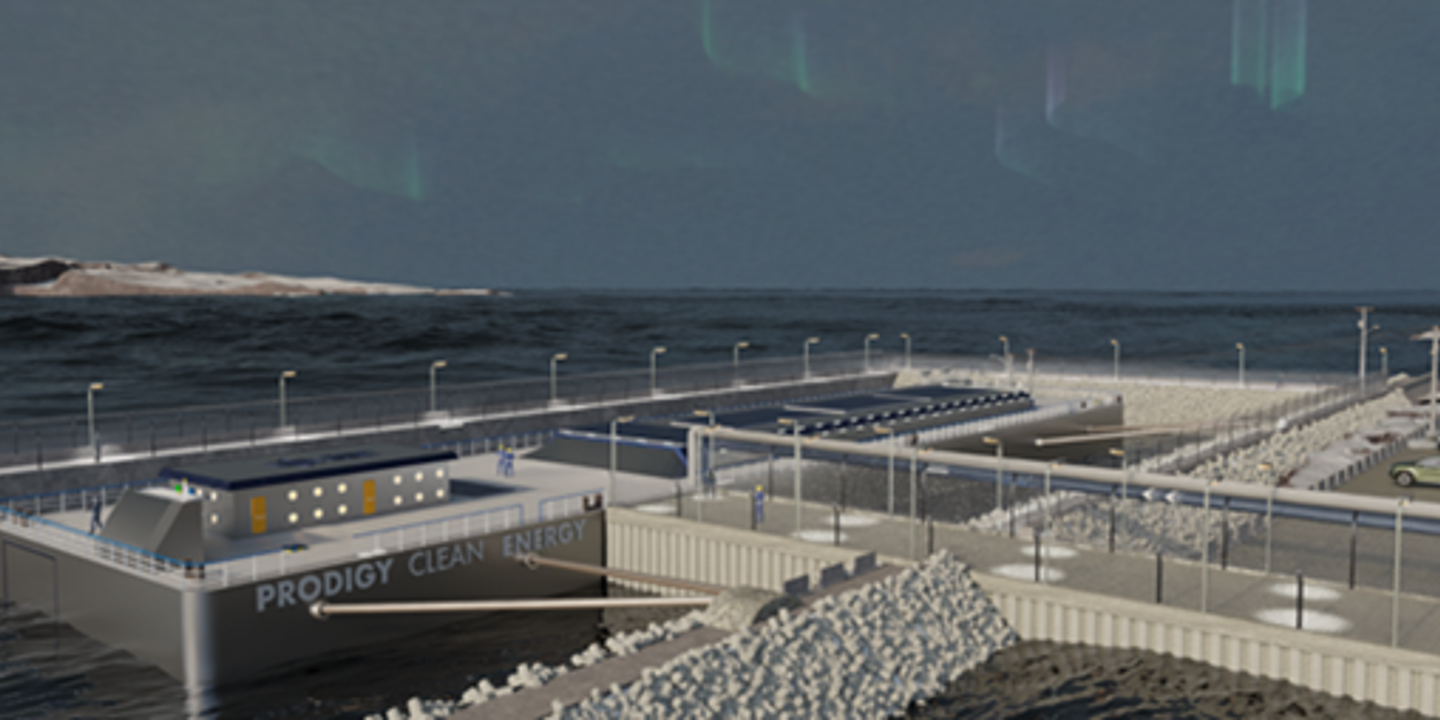
Prodigy Clean Energy (Prodigy) was commissioned by Natural Resources Canada (NRCan) to assess the feasibility of Transportable Nuclear Power Plants (TNPPs) using Canadian resources for deployment in remote locations to supply district heating and electric power. These gravity-based TNPP units are intended for installation on prepared sites adjacent to the shoreline.
The concept brings together marine, offshore and nuclear disciplines, requiring early alignment between regulators and maritime practice to define a compatible build strategy.
Solution
Lloyd’s Register (LR) Advisory was engaged by the client to provide expert advice on the marine and offshore aspects of design, construction, delivery and assurance for seriesbuilt TNPPs, to support them as they develop and implement an approach that would meet regulatory expectations and reflect better international practices in build strategy. This gave the client an independent technical perspective on safe and credible delivery within recognised frameworks
Approach taken
LR Advisory reviewed international regulations and classification frameworks relevant to offshore and nuclear installations. It then compared them across regulatory domains to identify how their principles could support TNPP development and how gaps and overlaps should be managed. The client is applying the resulting information in its ongoing work to link design and build considerations with the operational and organisational systems of the builder and operator, incorporating current nuclear assurance practices into marine and offshore contexts. The review mapped an assurance pathway, covering classification, certification and assurance for the TNPP’s sub-systems, the TNPP as a system-of-systems and the TNPP as part of a broader systems-of-systems. LR Advisory also advised on how the TNPP concept could integrate with future operation, maintenance and eventual decommissioning, ensuring that lifecycle considerations were reflected within the overall assurance framework.
Key activities and outputs
- Produced a longform technical report that reflected an understanding of Prodigy’s overall approach for a Factory manufacturing framework and:
- Defined the maritime statutory and classification landscape relevant to TNPPs and aligned it with the nuclear framework developed by the client and its partners
- Consolidated standards across offshore, maritime construction and supplier-based domains
- Provided LR expert perspectives to Prodigy’s efforts to explore both greenfield and brownfield TNPP factory sites
- Outlined approaches for risk and quality management, and for integrating organisational systems, drawing on offshore and nuclear experience
- Advised on sequencing and readiness steps for design and construction planning.
Key client benefits
- Having LR and nuclear industry together in one discussion improves the unified understanding of how regulatory and classification requirements align across marine, offshore and nuclear domains
- Greater readiness to engage with authorities, investors and supply partners through a recognised assurance pathway
- Independent verification that strengthened confidence in the concept’s feasibility and delivery potential
- Recognition of the client’s technical depth in translating nuclear design expertise into deliverable, transportable energy solutions.
Project outcome
The study produced a comprehensive pathway linking technical feasibility, regulatory alignment and delivery planning, creating a defined basis for the client to progress from concept design toward implementation.
Conclusion
Within its defined scope, the project demonstrated how offshore, marine and nuclear disciplines can be brought together in a credible assurance and regulatory framework for TNPPs, supporting safe and practical deployment in remote or populated environments.
Other applications
The approach used for this study was designed to meet the requirements of this particular project, and any broader application would require further validation. It illustrates how offshore, marine and nuclear disciplines can be integrated within a credible assurance and regulatory framework for TNPPs to guide safe and practical deployment in remote or populated environments.