


The Bunkering Services Initiative (BSI) is a voluntary organisation, open to all parties, aimed at raising the quality of bunker fuel supplied across ports in the Antwerp–Rotterdam–Amsterdam (ARA) region. Centred on Rotterdam, the world’s second largest bunkering hub, BSI aims to raise both the quality and the quantified accuracy of marine fuel deliveries.
Founding members include commodity and shipping heavyweights and major bunker suppliers including BP Marine, Cargill, Frontline, Hafnia, Hapag-Lloyd, Mercuria, Minerva Bunkering, Oldendorff Carriers GmbH & Co.KG, Trafigura, TFG Marine, DP World’s Shipping Solutions EAM, and Vitol.
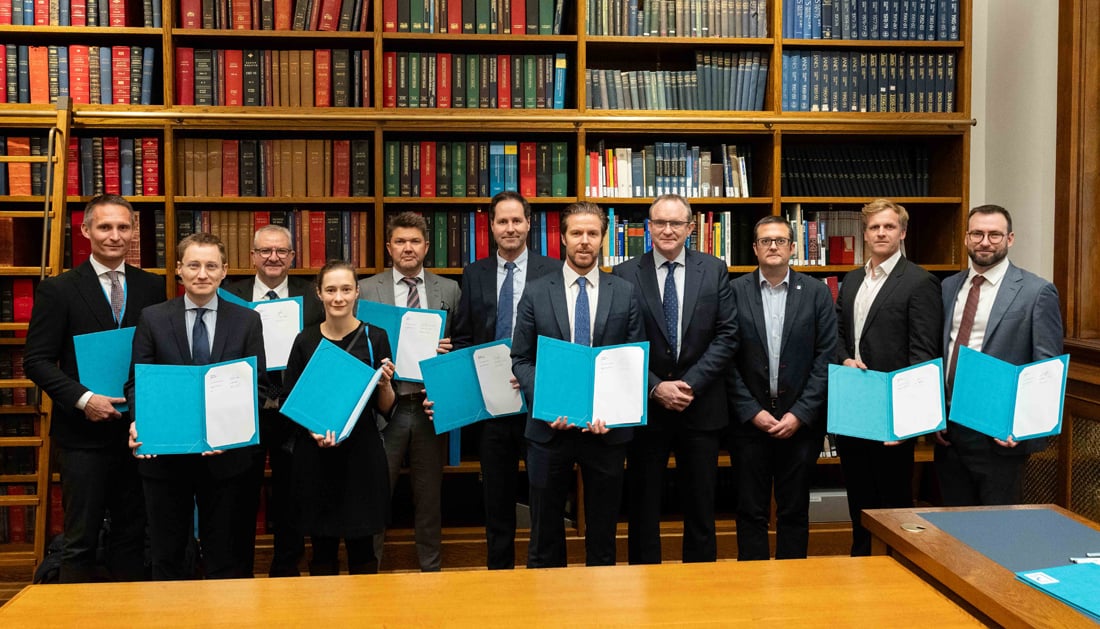
The Initiative was formally launched at LR’s London headquarters in December following more than six months of system design.
End-to-end tracking
LR will audit the system, while Singapore-based ADP Clear Pte Ltd, a digital bunkering specialist whitelisted by the Maritime Port Authority of Singapore (PSA), will offer the technology developed in its Advanced Delivery Platform. This technology ensures that tamper-proof data is recorded for both the quality and accurate quantities of bunker deliveries as they are transferred onto and through the barge to the receiving ships.
Although fuels of poor quality have been around for as long as ships have had diesel engines, the issue is climbing the safety agenda. That is because the quality of marine fuels has become significantly more important for the latest generation of engines designed to run more efficiently and use less fuel.
High-pressure common rail engines are at particular risk from poor-quality fuels, according to experts. Potential damages can include engine scuffing from metal-to-metal contact, the build-up of abrasive deposits, catalytic fines (small particles of abrasive aluminium and silicon oxides causing damage to piston crowns and rings), fuel system corrosion, and clogged filters.
Meanwhile, the fuels themselves are becoming more complex. Blended fuels designed to meet environmental targets raise the risk of fuel storage stability, while low-sulphur fuels have reduced lubricity, which can lead to treatment and handling issues and an increase in the wear rates of fuel pumps and injectors.


The ‘Wild West’
To find out more about the BSI, Horizons caught up with LR’s Tim Wilson, Principal Specialist Fuels Lubes and Emissions.
Wilson started as a marine engineer, at sea for 19 years, finally serving as a Chief. He has more than three decades of experience in marine fuel-related business and knows the challenges of managing poor-quality bunker stems during voyages at sea as well as busy stretches of coastal waters.
His colleague Alberto Pérez, LR’s Head of Maritime Commercial Markets, is responsible for overseeing strategic relationships with commercial stakeholders, including charterers and fuel suppliers seeking guidance from the firm.
Pérez says, “When BSI approached us with the idea, we knew it was not going to be easy, but we couldn’t say no. This was one of rare occasions industry was proactively addressing a long-standing issue through collaboration, and we felt it was our company duty to contribute to it.”
The supply of marine fuels is a convenient environment for cheating over quality or quantity. The two men likened the bunker business in certain regions as like the lawless Wild West. Fuel quality is questionable at various bunkering locations due to complex supply chains. In many of these places, the integrity of the supply chain, including final deliveries, may be insufficiently regulated and monitored.
This lack of regulation and oversight can result in first-rate fuel being doctored with poorer quality grades. Fuel can be siphoned off or not supplied in the first place. Furthermore, quantities can be measured manually using physical tank soundings, a process that is both time-consuming and inaccurate, and a potential point of dispute between buyers and sellers.
Mass flow meters (MFMs) are mandated across the ARA port range, but regulatory control has been limited to the general MFM EU MID requirements. This fails to assess the whole MFM flow system on board the barge/tanker.
Mirroring Singapore
While every attempt was made to mirror Singapore’s model, where the SS 648 standard for MFM regulation informed the evolution of ISO 22192:2021, the Rotterdam Bunker licence requirements still allow for the possibility of stricter controls, such as those offered by the BSI with ADP standards. Wilson explains that the Singapore model has strong central control, “The PSA being in full charge of all things maritime including the supply of fuel to ships.
“Here in Europe, on the other hand,” he continues, “which is the second largest marine fuel supplying region after Singapore, you have a range of ports across a number of countries with varying regulations, many different bunker suppliers, and sometimes old bunker barges without MFMs that are no longer fit for purpose.
“There is fierce competition for business here in this region and we know that in many instances, bunker quantity and quality delivered on board fail to meet industry standards. Now, with the launch of the BSI, we are changing all that. We have introduced a level of transparency across the entire supply chain that has never existed before,” he says.
Perez adds “The BSI concept is based on immutable blockchain technology and is fully transparent to all parties,” he says. “If the buyer has a question, the supplier has the answer.”
And, he says that the BSI’s supplier participants have spent the last six months preparing for the BSI. “They have been onboard barges, installed internet-of-things technology, digital hardware and MFMs integrated with ADP Clear’s hardware and software. Bunker crews have received special training in the Initiative’s protocols and MFM operational best practice.”


Multi-fuel environment
Meanwhile, fuel-testing companies, more important than ever in today’s multi-fuel marine environment, directly input their laboratory test results into the ADP Clear platform. This ensures that every marine fuel buyer across the ARA region has precise details of fuel quality from every sample, from shore tank right through the system to final delivery.
Wilson says, “In some parts of the world, the absence of regulations presents significant risks for owners seeking the lowest-cost fuel options. Disputes in this sector are both time-intensive and costly.
“We are delighted that the BSI is up and running and providing a ‘gold standard’ across the ARA range for the first time ever. The Initiative has quite literally transformed the safety and security of bunker fuel deliveries across this region.
“From a procurement perspective, consistency and accountability across the supply chain are non-negotiable. The BSI framework strengthens both by introducing verifiable data and greater transparency at every stage of the delivery process,” Wilson adds.
“That gives us, and our customers, far greater confidence that contractual terms are being met in practice, not just on paper - while also reducing the scope for disputes and operational inefficiencies,” says CEOs Peter Grunwaldt and Olivier Josse of Seascale Energy, a marine fuel procurement joint venture between Hafnia and Cargill.
