


Faced with increasingly complex threats, extended areas of operation, contested waters and persistent surveillance demands, navies are turning to autonomy as a means of enhancing reach, resilience and effectiveness. What emerges is not a simple substitution of crewed vessels, but a more sophisticated mix of autonomous, optionally crewed and traditional platforms working together for coordinated operations.
Autonomy also acts to achieve more – a force multiplier. Autonomy allows navies to field more platforms without the prohibitive cost of building and maintaining large, expensive units. With more expendable assets at their disposal, navies can undertake risky or high-intensity missions while keeping personnel out of harm’s way.
Today, the most mature applications of naval autonomy sit in surveillance, intelligence gathering and threat detection. Autonomous and optionally crewed vessels can operate for extended periods, cover wider areas and undertake routine or hazardous missions without placing personnel at risk.
LR's Global Director, Submarine Business Matthew Palmer says this capability is under demand globally. “Programmes such as the Dutch–Belgian mine countermeasures fleet and the US Navy’s No Manning Required Ship (NOMARS) programme show how uncrewed systems will be designed into future force structures rather than bolted on as afterthoughts.”
In the UK, the Royal Navy and Ministry of Defence have set ambitious near and long-term objectives in autonomy, through initiatives such as Atlantic Bastion. Optionally crewed concepts—platforms designed to operate with or without personnel onboard—emerge as a key feature of future fleet planning, particularly as navies explore the balance between human judgement and machine precision.
“Collectively, these programmes demonstrate how autonomy can extend operational reach, improve persistence and act as a genuine force multiplier for in resources stretched fleets,” says Palmer.
However, as demand for maritime autonomy accelerates, so do questions around how such systems can be deployed safely, responsibly and at scale.

Navigating certification and regulatory complexity
Autonomous naval vessels operate across a wide variety of contexts, from low-speed survey work to high-speed operations, from surface navigation to fully submerged missions, and from remote control to increasingly independent decision-making. Such assets vary in size, operational behaviour, level of autonomy and interaction with human operators, which means no single regulatory and certification framework can cover the breadth of platforms now emerging.
For commercial remotely operated uncrewed vehicles (ROUVs) under 24 metres in the UK, the Maritime Coastguard Agency’s Work Boat Code Edition 3 (WBC3) remains the primary assurance route. While this gives a route to sea for trials and early operations, it can become a constraint for defence-focused assets that are still classed as commercial platforms prior to formal military acceptance.
Defence ROUVs and autonomous assets bring further layers of complexity. Examples include highspeed operations exceeding 50 knots, alternating surfaced and submerged missions, and uncrewed platforms capable of transporting military personnel. Such diverse risk profiles demand a tailored, case-by-case approach to safety assurance, adapting regulatory expectations to the realities of naval operations.
These autonomous systems will operate alongside highly complex, crewed vessels, further increasing the need for robust coordination and safety protocols. Navies need reassurance that the integration of such new capabilities will not endanger existing assets or personnel during joint operations.
Jordan McRuvie, LR’s Unmanned Marine Systems (UMS), Marine and Offshore Specialist, says “The assurance landscape is even more challenging for larger vessels, particularly those exceeding 24 metres, and the broad spectrum of defence-related platforms which sit outside the scope of existing commercial codes.
“The forthcoming International Maritime Organization’s (IMO) Maritime Autonomous Surface Ships (MASS) Code, expected to be issued in 2026, is set to provide a goal-based, nonmandatory foundation for future assurance, but tailoring will still be required to fit the diverse and demanding nature of defence applications.”
This is where experience in independent classification and assurance becomes critical.

LR’s leadership in autonomous systems
LR has been at the forefront of autonomous system assurance since 2017, when it became one of the first classification societies to publish a dedicated goal-based standard for uncrewed maritime technologies: the Unmanned Marine Systems (UMS) Code. Since then, LR has supported some of the world’s most advanced autonomous deployments.
LR certified the world’s first hydrogen powered ROUV and was the first certifying authority accepted by the Maritime Coastguard Agency to certify ROUVs to the WBC3. LR has since certificated three ROUVs to the WBC3 standard, with more than a dozen additional systems progressing through the pipeline. LR also applied the UMS Code across a broad range of platforms, from the Fugro Blue Essence series to BAE Systems’ Autonomous Pacific 24— the first naval platform to complete certification under the UMS Code.
This global recognition of LR as a trusted professional is particularly significant in the context of diverse national regulations and the complexities of international waters. While individual countries establish their own restrictions and frameworks, many look to LR as a benchmark for safety and assurance. This universal regard enhances operational credibility and facilitates smoother international collaborations in the deployment of autonomous maritime technology.
In addition to surface assets, LR has expanded its leadership into submerged systems, supporting a growing portfolio of uncrewed underwater platforms. The organisation brings together expertise from commercial and defence sectors, contributing to standards development and supporting industry working groups shaping the next generation of autonomous regulation.
“As autonomous assets become increasingly complex, the need for effective regulation grows ever more urgent. Regulators have a duty to ensure these systems operate safely alongside crewed platforms, safeguarding both personnel and existing naval assets during joint operations,” says McRuvie.
“This breadth of experience is particularly valuable in defence contexts, where operational diversity demands that rules and standards are tailored on a case-by-case basis rather than applied rigidly,”
That depth of expertise now underpins one of the most significant recent milestones in naval autonomy.
Herne: a breakthrough in certifying large uncrewed and autonomous submersibles
Developed by BAE Systems, Herne® is an extra-large autonomous underwater vehicle (XLAUV) designed to deliver extended naval operations. Its design incorporates a high level of modularity and flexibility, enabling the platform to be rapidly adapted to meet evolving mission requirements. This adaptability is delivered through a modular platform and versatile payload integration, all powered by Nautomate®, BAE Systems’ autonomous control system.
LR leads Herne through certification against its UMS Code through close collaboration, with compliance through classification to the Rules and Regulations for the Construction and Classification of Submersibles and Diving Systems (SDS Rules). These rules give detailed technical solutions underpinning the performance requirements of the UMS Code, delivering a robust and structured pathway to ensure the safety and reliability of large uncrewed submersibles.
This approach represents a first for the sector. Herne is expected to become the first XLAUV to be certified to the UMS Code and the first unmanned submersible to be classed under the SDS rules. More importantly, it demonstrates that even the most complex autonomous naval platforms can be independently assured against recognised, goal-based standards.

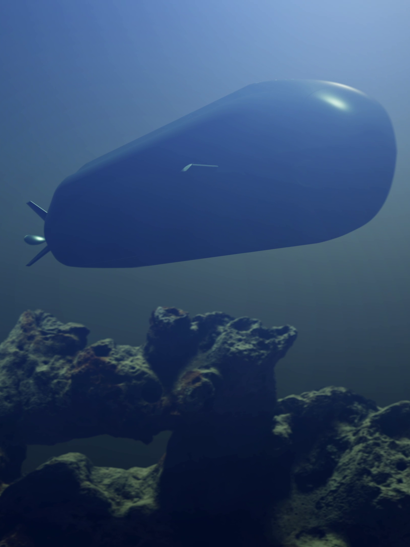
However, operating underwater presents unique challenges, particularly with navigation and situational awareness. Unlike surface vessels, these assets cannot rely on radar or cameras while submerged, making safe and accurate navigation far more complex.
Instead, they must depend on technologies such as sonar, inertial navigation systems and advanced algorithms to interpret their surroundings and avoid obstacles. Software is key to managing complex, reliable autonomous decisions in environments with limited sensing. Nautomate works across surface and sub-surface platforms and is progressing through LR’s Software Conformity Assessment under the UMS Code.
This underlines the importance of rigorous assurance and tailored certification frameworks, so these pioneering underwater systems can operate safely and effectively even in the absence of conventional sensing equipment.
“Assured and trusted autonomy will be central to future naval operations worldwide; our fast-paced development puts us at the forefront of this advancement. Herne will be the world’s first XLAUV and unmanned submersible certified under both the UMS Code and SDS rules — setting a new global benchmark for militarised autonomous undersea operations,” says Scott Jamieson, Defence Solutions Managing Director at BAE Systems.
Nick Martin, Maritime Autonomy Project Manager at BAE Systems, adds “We’re excited to partner with LR as we progress the certification of the Herne XLAUV. Purpose built with a rigorous focus on safety, assurance and certification readiness, Herne sets a new benchmark for trusted autonomous maritime systems.”
For those involved in the programme, the significance lies not only in the technical achievement, but in what it signals for the future. Certification has been embedded into the design and development process, shaping decisions around systems architecture, redundancy and operations from the outset. This reduces risk during trials, accelerates the path to operational use and provides navies with greater confidence in deploying uncrewed capability at scale.
From an industry perspective, BAE Systems sees platforms like Herne as central to the next generation of naval capability. They offer the ability to operate persistently in contested environments, undertake missions that would be impractical or unsafe for crewed vessels, and adapt rapidly as threats evolve. Yet these advantages can only be realised if trust is established, both within navies and with wider maritime stakeholders.
Palmer concludes, “As autonomous maritime vehicles continue their transition from novelty to necessity, assurance will remain a defining enabler. By combining technological innovation with robust, adaptable certification frameworks, the validation of the Herne platform ensures that naval autonomy develops at pace and with confidence.
“In doing so, it is laying the foundations for a future fleet where autonomy is not an experiment, but a dependable source of maritime power,” he says.
