


Alternative-fuelled vessels introduce a greater range of technical and engineering challenges than any previous generation of ship designs. This commonly held view across class societies, shipyards, designers, ship owners, bunker facility, equipment manufacturers and regulators, illustrates the increased level of expertise and commitment that is required to enable shipping to navigate towards net-zero.
These complex ship designs and technologies are also generating new ways of working that puts greater emphasis on partnerships to enable joined-up problem solving.
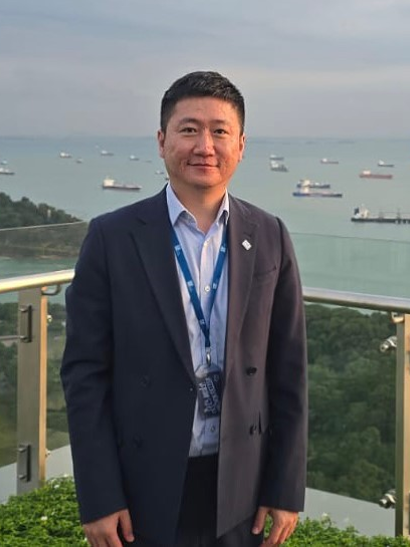
It’s a point picked up by LR’s Global Technical Support Office Director Li Tianxiang, who in recent years has noticed the considerable benefits that joint development projects (JDPs) and partnerships bring to complex projects.
“One of the most significant benefits from LR’s journey into alternative fuels is the importance of early and close collaboration—not just with shipyards, but also with fuel suppliers, shipowners and manufacturers,” says Li. “We’ve realised you have to allow extra attention and efforts for these projects,” he notes, highlighting the steep learning curve involved in pioneering new fuel technologies.
“When you work with clients through JDPs, it very often means that by the time we move beyond the initial stages to the project stage, a lot of the work has already been done,” he says.
For LR, it’s extensive track record in JDPs with major shipyards across North Asia has been instrumental in building both technical expertise and client confidence. Li refers to one of the most significant projects, the world’s first 210,000-ton ammonia dual-fuel bulk carrier which is being built at Qingdao Beihai Shipbuilding for owner, CMB.
Li confirmed that the vessel’s plan approvals are complete and construction is almost completed. “It’s a testament to LR’s capability to manage complex and challenging projects,” he asserts and points to the Approval in Principle (AiP) that LR granted to engine manufacturer WinGD’s ammonia two-stroke engine in 2023.
Another significant project in China that LR is supporting – an ammonia fuelled 8,200 teu container ship – began with a JDP with project partners SDARI, MSC, MAN and the Liberian Registry. Work is now well underway, with Hazard Identification completed in 2023 and engine single-cylinder testing carried out in 2024. The third and fourth stages of the JDP are currently underway and are focussed on technical clarification of the application of IMO interim guidelines, with additional studies such as gas dispersion analysis and human factors.
Here Li highlights the importance of collaboration with the engine manufacturers when employing new fuels for propulsion. “The engine is a core part of alternative fuel application in the future,” Li, Tianxiang emphasised, referencing LR’s engagement with leading engine manufacturers, including the approval of ammonia and methanol engines.
Making these projects materialise requires an extensive team efforts across LR’s team of global experts. LR recognises the importance of having the right expertise it matters, and notes the more than 160 surveyors and 33 plan approval specialists that have been recruited in China in the past 18 months in order to support the boom in merchant ship new construction in North Asia.
Li emphasises that clients benefit from LR’s structure of ‘local presence, global expertise’. “Thanks to LR’s global knowledge sharing and expertise, LR can provide best practices across regions. For challenging projects, it’s important to have the best subject matter experts available to work on projects no matter where they are located, but our relationships with yards is never compromised, with colleagues located at the heart of the building process.”
In this way, he explains, our teams deliver projects that range from engine and fuel supply system approvals to robust risk-based certification processes that address hazards from the design stage through to vessel operation.


Pathway to decision making
The Approval in Principle (AiP) process can also play a valuable role in ensuring that new designs are feasible, safer and fit for purpose. According to Clarksons, AiPs have increased from over 20 cases in 2021, to around 120 in 2024. Around 70% are alternative-fuel capable. Chinese and Korean ship designers have dominated these AiPs, according to Clarkson’s reports, with LR granting 21% of AiPs announced over the last five years – a larger share than any other class society.
Recent examples include AiP granted to Nantong COSCO KHI Ship Engineering Co Ltd (NACKS) for an 86,000 dwt ammonia-fuelled bulk carrier, announced at Marintec China in December;
A further vessel design AiP that included new technologies was granted to Samsung Heavy Industries for an ammonia carrier powered by Amogy’s technology that uses ammonia cracking to create hydrogen for the fuel cell installed onboard.
With new vessel types incorporating such advanced technology, it’s clear to see how important Class Rules are to the safe delivery of new vessel types, notes Li, adding that LR has developed rules for ammonia and methanol, as well as being the first to introduce hydrogen-specific rules in 2023.
Li also noted that it’s not only how ships are being powered that’s changing, it’s also the way that they are being operated and the socio-economic factors behind those decisions. With this in mind he notes that stakeholders are increasingly seeking partnerships that “provide life time end-to-end support and everything in between”. Besides technical support, LR Advisory helps shipowners make appropriate decisions about fuel choices, tailored to their fleet’s trading patterns and operational needs.
This advisory role is increasingly vital as owners weigh investments in new technologies against evolving regulatory and market variations. “It’s not only about technical expertise,” Li, Tianxiang says. “It’s also about helping owners make the right investment decision from the beginning”.
