


Ageing offshore assets are no longer viewed as liabilities approaching the end of their design life, but as valuable strategic infrastructure as the world faces the parallel pressures of energy transition and constrained capital.
Whether Floating Production, Storage, and Offloading (FPSOs), floating production units, fixed platforms or topsides systems, extending the life of these assets is a full lifecycle challenge that demands a careful judgement to balance technical rigour and operational discipline.
Operators are exploring life extension as an alternative to costly newbuilds or premature decommissioning, as Anna Apostolopoulou, LR’s Global Floating Offshore Installations Director, explains “operators are asking a very practical question: can I now extend the life of my asset, and how long can I run it safely, economically and responsibly?”
Engineering defines what is possible
Life extension begins with knowing your asset. Without a clear understanding of structural integrity, fatigue and equipment condition, any decision to extend an asset’s life is speculative.
"Life extension is about making structured, evidence-based decisions," says Apostolopoulou. "Assets do not age in the same way. Environment, operational history and maintenance practices all influence how they perform over time."
A platform operating in the North Sea faces very different challenges from one deployed in West Africa or Southeast Asia. Understanding those differences is a fundamental consideration.
For Chris Thornton, Team Lead for Offshore Floating Structures and Mooring at LR, this means interrogating both the past and present condition of an asset in detail. “The bedrock of life extension for these types of assets is to look at the strength and fatigue of the whole structure,” he says.
Thornton says life extension assessments typically begin with a feasibility stage, examining historical performance, structural condition and degradation trends. Detailed fatigue assessments, structural analyses and condition evaluations help establish whether continued operation is technically viable.
Engineering analysis is the foundation for every subsequent decision, he says. "Without understanding the current condition of the asset, everything else becomes guesswork."
These assessments often reveal assets to have considerably more life than anticipated. While some assets may prove unsuitable for extension, most can sustain additional years of safe operation when supported by the right interventions. “In the vast majority of cases, it is possible to extend,” Thornton adds.
In some cases, assets designed for 25 years of service have been safely extended to 40 years or beyond. In others, operators have secured multiple successive life extensions after demonstrating continued fitness for service.
“The key is understanding the asset as it exists today, not as it was originally designed decades ago,” Thornton notes.

From feasibility to financial reality
Once an asset's technical condition has been established, attention shifts towards operational performance and commercial viability.
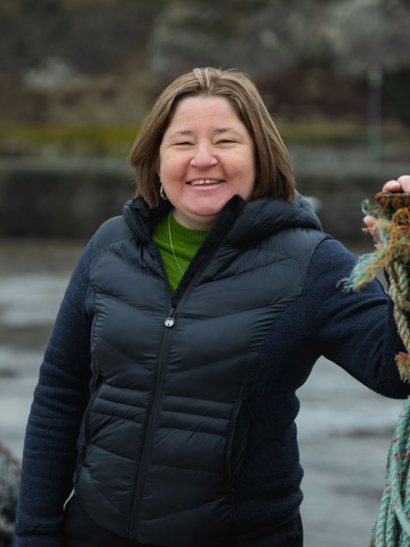
Karen Cowie, Asset Management Discipline Lead at LR, says life extension quickly becomes an economic exercise. “How do we make that ten years viable?” she asks. “How do we make sure we provide that reliability and that safety?”
Many offshore assets were designed for operational assumptions that no longer reflect current realities. Reservoir conditions evolve, production profiles change and maintenance strategies often become disconnected from operational reality.
For Cowie, the challenge is in helping operators bridge the gap between historical design assumptions and future operational needs. "Engineering tells us what is achievable," she explains. "The next step is understanding how to operate the asset safely, reliably and cost-effectively during the extended life phase."
This requires a detailed understanding of maintenance histories, equipment performance, operational constraints and replacement strategies.
Rather than simply replacing ageing equipment, operators increasingly adopt risk-based approaches that prioritise investment where it delivers the greatest value. Some systems may require immediate intervention, while others can continue operating safely for years with targeted monitoring and maintenance.
In practice, this means identifying which systems must be upgraded today, which can wait until year five, and which may remain fit for service throughout the entire extension period.
Such planning becomes increasingly important as operators seek to maximise return on existing assets while avoiding unnecessary expenditure.
The reality of digital ambition
Digital technologies influence how life extension projects can be delivered. Digital twins, advanced analytics, robotics, drones and remote monitoring systems all offer opportunities to improve decision-making and reduce operational risk.
In practice, however, deploying these tools on ageing infrastructure is far from straightforward. “Integrating new digital or cybersecure systems into 20- or 30-year-old assets is costly and complex,” says Cowie.
Many offshore assets approaching life extension were designed decades before today's digital technologies existed. Integrating modern monitoring systems into ageing infrastructure can be costly, complex and operationally disruptive.
Control and instrumentation systems present a particular challenge. Technology cycles often move more quickly than extension timelines with equipment becoming obsolete long before the asset reaches the end of its operating life.
Operators therefore face difficult choices about where digital investments genuinely create value and where they may not be economically justified.
"There is always a tension between innovation and practicality," says Cowie. "It is not about adopting technology for its own sake, but about identifying where it adds genuine value and where it introduces unnecessary complexity."


The overlooked human factor
Despite advances in technology, the success of life extension programmes depends on people. Engaging the workforce, the right organisational culture and aligning key stakeholders remain among the most important determinants of success.
Successful life extension addresses cultural and behavioural points too says Apostolopoulou. Life extension represents a significant shift in mindset, where traditional maintenance philosophies built around proactive replacement must give way to more nuanced approaches.
“Many technicians are trained to fix everything,” Apostolopoulou notes, “but in life extension mode some equipment .”
Building trust in these decisions requires transparency, communication and involvement from the outset. "People need to understand why decisions are being made and how those decisions support safety and operational objectives," explains Apostolopoulou.
Even the most technically robust plans can falter without bringing the workforce with you. Workforce concerns around safety, job security and operational change must be addressed openly and transparently.
Attracting and retaining talent presents another challenge. As assets age, some operators find it difficult to engage the next generation of workers, who may perceive limited long-term opportunities offshore.
For this reason, successful life extension programmes increasingly place workforce development and stakeholder engagement alongside engineering and technology considerations.
Designing for tomorrow's life extension
Asset life extension will be shaped by the lessons learned today. Operators and designers plan assets to be designed and built with extension in mind.
“Thinking now that in 40 years this asset would need to be extended or decommissioned,” Apostolopoulou suggests, “what can we do to embed that thinking into today’s designs?”
This reflects a broader shift towards lifecycle thinking, recognising that the value of an asset is not fixed at the point of design, but evolves over decades of operation that balances technology, economics, operational performance and human behaviour.
Podcast: Secrets To Life Extension For Aging Offshore Energy Assets
