


Significant outcomes from SSE 12:
Below is a brief overview of some of the significant outcomes from SSE 12:
-
Draft amendments to SOLAS regulations II-2/3 and II-2/9 were finalised following the review of SOLAS regulation II-2/9 on “Containment of Fire” to incorporate existing guidance and clarify requirements. Expected to go to MSC 112 (December 2026) for approval and at MSC 113 (2027) for adoption.
-
A proposal to modify the "Temperature cycling test- test data" sheets to ascertain the confirmation about exposure of prototype sample to ordinary room temperature condition between the hot and cold cycles of LSA and to record the associated information was finalised. Draft amendments to MSC.1/Circ.1628/Rev.4, MSC.1/Circ.1629, MSC.1/Circ.1630/Rev.3 and MSC.1/Circ.1633, will go forward for approval to MSC 112.
-
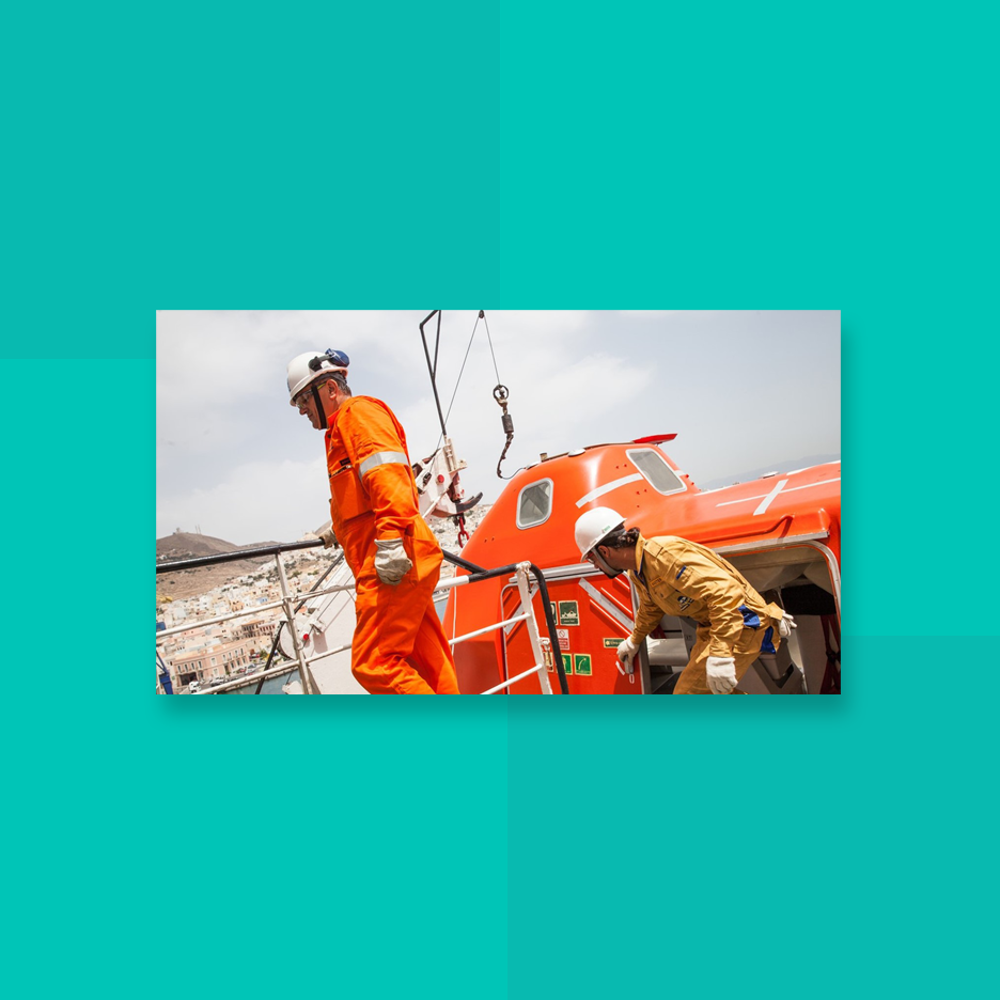
New requirements for ventilation of partially enclosed lifeboats
Work continued on the development of the requirements with entry into force expected 1 January 2032. -
Revision of SOLAS chapter III and the LSA Code
The sub-committee continued to develop the goal-based amendments to SOLAS Chapter III and the LSA Code. -
Amendments to SOLAS chapter III and chapter IV of the LSA Code to require the carriage of self-righting or canopied reversible liferafts for new ships.
-
Work continued on the development of draft regulations – further work is expected in the future, entry into force expected 1 January 2032.
-
Comprehensive review of Resolution MSC.402(96)
Limited progress was made in further reviewing the requirements for maintenance, thorough examination, operational testing, overhaul and repair of lifeboats and rescue boats, launching appliances and release gear. -
Work continued on the development of amendments to SOLAS chapter II-2 and the FSS Code concerning detection and control of fires in cargo holds and on the cargo deck of containerships. Draft amendments to SOLAS chapter II/2 on water mist lances and portable infrared thermal imagers were progressed along with supporting draft guidelines.
-
Work continued on the evaluation of the adequacy of fire protection, detection and extinction arrangements in vehicle, special category and ro-ro spaces in order to reduce the fire risk of ships carrying new energy vehicles.
-
A draft work plan was developed to consider the safety regulations for the following alternative fuels and new technologies:
– Methyl/ethyl alcohol fuels;
– Fischer-Tropsch (FT) diesel;
– Lithium-Ion Batteries;
– Supercapacitor Energy Storage technology;
– Swappable traction lithium-ion battery containers; and
– Advanced Waste Heat Recovery.