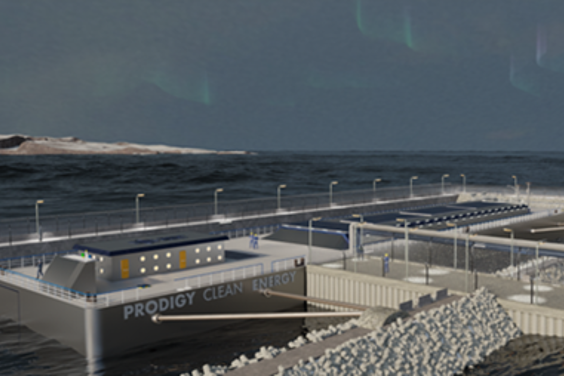
As decarbonisation moves from ambition to operational reality, the focus shifts to overcoming critical infrastructure barriers and creating clear pathways for large-scale deployment.
For offshore operators, decarbonisation represents a fundamental shift in how assets are designed, managed and operated. Emissions reduction is increasingly shaping production strategies and infrastructure decisions, while new technologies must integrate into installations that were not originally built with energy transition pathways in mind. As a result, technical change must be assessed within the constraints and complexities of working offshore systems, not just against policy goals.
LR provides independent assurance to support this transition. We evaluate how emerging technologies interact with existing equipment, operational conditions and regulatory frameworks, helping ensure that decarbonisation solutions are practical, reliable and aligned with
-
Reducing Operational Emissions
-
Infrastructure & Energy Transition Integration
-
Carbon Capture, Utilisation & Storage (CCUS)
Beyond simply meeting targets, decarbonising your existing assets is about unlocking the next level of operational excellence. True progress starts with a deep understanding of your facility’s unique DNA balancing process stability with the drive for lower emissions.
Turning environmental obligations into a competitive advantage, we dive deep into your asset’s performance to find the perfect integration points for low-carbon technology, ensuring every reduction is sustainable and every process remains resilient. With our independent assurance, your emissions reporting moves beyond compliance to become a powerful, defensible statement of leadership to regulators and stakeholders alike.
Offshore decarbonisation is more than a series of upgrades; it is the creation of a sophisticated, interconnected energy ecosystem. By linking existing hydrocarbon assets with electrification, alternative fuels, and CO₂ transport networks, we are building the high-performance infrastructure of tomorrow. Success in this new landscape depends on seeing the big picture, where every load, interface, and decision is harmonised to ensure system-wide resilience and efficiency.
Combining visionary policy with cross-sector reality we examine the complexities of CO₂ behaviour and long-term storage monitoring, to ensure your transition is backed by rigorous risk assessment and regulatory confidence. Together, we align asset owners and developers to turn interdependence into a strategic advantage, laying the foundations for a net-zero offshore legacy.
In offshore systems where electrification cannot fully address emissions, carbon capture forms part of the transition pathway. Its viability depends not only on capture efficiency but on whether captured CO₂ can be transported, transferred and permanently stored within defined safety limits and regulatory boundaries.
Liquefied CO₂ introduces practical constraints across the capture-to-storage chain. Transfer arrangements, pressure and temperature envelopes and material compatibility influence how systems are designed and operated at the interface between vessels, ports and fixed infrastructure. Where formal guidance remains limited, risk-based technical evaluation identifies operational gaps and informs the development of standards needed for wider deployment.
LR provides independent classification and Approval in Principle for emerging onboard and offshore capture technologies before installation, addressing technical and regulatory considerations at an early stage. Deployment is then assessed in relation to surrounding infrastructure, storage pathways and regulatory maturity. Carbon accounting approaches are reviewed alongside physical system performance so that scale-up reflects demonstrated capability within offshore operating conditions.
Beyond simply meeting targets, decarbonising your existing assets is about unlocking the next level of operational excellence. True progress starts with a deep understanding of your facility’s unique DNA balancing process stability with the drive for lower emissions.
Turning environmental obligations into a competitive advantage, we dive deep into your asset’s performance to find the perfect integration points for low-carbon technology, ensuring every reduction is sustainable and every process remains resilient. With our independent assurance, your emissions reporting moves beyond compliance to become a powerful, defensible statement of leadership to regulators and stakeholders alike.
Offshore decarbonisation is more than a series of upgrades; it is the creation of a sophisticated, interconnected energy ecosystem. By linking existing hydrocarbon assets with electrification, alternative fuels, and CO₂ transport networks, we are building the high-performance infrastructure of tomorrow. Success in this new landscape depends on seeing the big picture, where every load, interface, and decision is harmonised to ensure system-wide resilience and efficiency.
Combining visionary policy with cross-sector reality we examine the complexities of CO₂ behaviour and long-term storage monitoring, to ensure your transition is backed by rigorous risk assessment and regulatory confidence. Together, we align asset owners and developers to turn interdependence into a strategic advantage, laying the foundations for a net-zero offshore legacy.
In offshore systems where electrification cannot fully address emissions, carbon capture forms part of the transition pathway. Its viability depends not only on capture efficiency but on whether captured CO₂ can be transported, transferred and permanently stored within defined safety limits and regulatory boundaries.
Liquefied CO₂ introduces practical constraints across the capture-to-storage chain. Transfer arrangements, pressure and temperature envelopes and material compatibility influence how systems are designed and operated at the interface between vessels, ports and fixed infrastructure. Where formal guidance remains limited, risk-based technical evaluation identifies operational gaps and informs the development of standards needed for wider deployment.
LR provides independent classification and Approval in Principle for emerging onboard and offshore capture technologies before installation, addressing technical and regulatory considerations at an early stage. Deployment is then assessed in relation to surrounding infrastructure, storage pathways and regulatory maturity. Carbon accounting approaches are reviewed alongside physical system performance so that scale-up reflects demonstrated capability within offshore operating conditions.
Technical assurance for CCUS infrastructure
-
Injection & Process Systems
-
Transport & Pipeline Integrity
-
Offshore Facilities & Construction
-
Regulatory & Infrastructure Readiness
-
Selected Industry Examples
Engineering assessment of CO₂ injection and process systems confirms safe containment across expected operating conditions. Safety-critical functions, including shutdown and pressure protection systems, are reviewed to verify fail-safe performance.
Assessment of CO₂ transport pipelines examines structural integrity, materials suitability and operating conditions to manage corrosion, pressure and phase behaviour risks.
Verification of offshore facilities confirms compressors, pumps and storage systems comply with relevant standards. Construction inspection and commissioning witnessing ensure installation aligns with approved design.
Technical input supports emerging regulatory frameworks for CO₂ infrastructure, including conformity assessment and port readiness. Industry collaboration addresses operational considerations associated with large-scale CO₂ transport.
Shell Peterhead and White Rose: Verification and assurance for the CCS projects, covering CO₂ capture, transport and offshore storage in the UK.
Perenco Poseidon: Verification support for CO₂ injection into a depleted gas reservoir within the UK Leman field under an accelerated programme.
Mellitah Oil and Gas: Verification of the FEED stage for an integrated onshore and offshore CO₂ capture, transport and storage project in Libya.
Chevron Gorgon: Verification and certification activities for the Gorgon LNG facility in Australia, incorporating large-scale geological CO₂ storage.
Evida CO₂ Infrastructure: Regulatory compliance and conformity assessment services for CO₂ infrastructure projects in Denmark.
Engineering assessment of CO₂ injection and process systems confirms safe containment across expected operating conditions. Safety-critical functions, including shutdown and pressure protection systems, are reviewed to verify fail-safe performance.
Assessment of CO₂ transport pipelines examines structural integrity, materials suitability and operating conditions to manage corrosion, pressure and phase behaviour risks.
Verification of offshore facilities confirms compressors, pumps and storage systems comply with relevant standards. Construction inspection and commissioning witnessing ensure installation aligns with approved design.
Technical input supports emerging regulatory frameworks for CO₂ infrastructure, including conformity assessment and port readiness. Industry collaboration addresses operational considerations associated with large-scale CO₂ transport.
Shell Peterhead and White Rose: Verification and assurance for the CCS projects, covering CO₂ capture, transport and offshore storage in the UK.
Perenco Poseidon: Verification support for CO₂ injection into a depleted gas reservoir within the UK Leman field under an accelerated programme.
Mellitah Oil and Gas: Verification of the FEED stage for an integrated onshore and offshore CO₂ capture, transport and storage project in Libya.
Chevron Gorgon: Verification and certification activities for the Gorgon LNG facility in Australia, incorporating large-scale geological CO₂ storage.
Evida CO₂ Infrastructure: Regulatory compliance and conformity assessment services for CO₂ infrastructure projects in Denmark.
Decarbonisation FAQs
Decarbonisation shifts how power is generated, managed and integrated within offshore installations. Emissions reduction strategies must function within existing operating systems, requiring careful evaluation of performance limits, system compatibility and regulatory impact.
Independent assurance provides objective verification that transition technologies perform as intended under real operating conditions. It strengthens confidence in emissions data and supports credible engagement with regulators, partners and stakeholders.
Readiness is demonstrated through evaluation of equipment performance, process stability, system integration limits and operational constraints. This confirms that emissions reductions can be delivered in practice without compromising safety or operational continuity.
Technical viability rests on the ability of capture systems to operate reliably in offshore conditions and on the practical deployment of transport and storage pathways within defined safety and regulatory boundaries.
Liquefied CO₂ handling requires controlled pressure and temperature management, material compatibility and secure transfer between vessels and fixed infrastructure. These interfaces introduce operational and regulatory considerations that must be resolved before deployment.
Structured technical evaluation within existing regulatory frameworks, supported by early engagement with authorities, enables controlled deployment while informing the development of emerging standards.
Classification and Approval in Principle provide early-stage technical validation of emerging technologies, confirming design maturity and regulatory alignment before installation or large-scale investment.
New energy systems introduce additional loads and system interfaces that affect existing offshore assets. Early integration planning ensures compatibility, operational stability and regulatory alignment across the wider asset network.
Long-term storage assessment examines containment performance, monitoring capability and behaviour under expected operating conditions to confirm sustained regulatory compliance.