


Conversations around nuclear in maritime have accelerated in recent months, and as attention turns to deployment, the industry needs guidance on the practical steps to bring nuclear power to maritime use.
LR plays a key role in collaborating with disparate stakeholders across nuclear and marine to support its future deployment. The key challenge is to reconcile two mature but historically separate regulatory worlds. Maritime requirements must now be considered alongside nuclear licensing, safety, security and safeguards as an integrated whole throughout the life of an asset.
Meg Albrecht, LR Senior Engineer, Nuclear Technology and Alternative Fuels, says, “The industry has yet to choose and implement a particular technical solution. In these situations, it is important to be clear about the goals that need to be achieved, the functions that need to be performed and the evidence that demonstrates a design can meet those requirements.”
ATLAS: an international framework
A significant milestone towards nuclear maritime came in August with the formal launch in Washington DC of the International Atomic Energy Agency’s (IAEA) Atomic Technologies Licensed for Applications at Sea (ATLAS) initiative. ATLAS is designed to support the maritime industry's exploration of small modular reactors for civilian ships and offshore energy and to tackle practical issues of regulation, nuclear safety, security, safeguards, liability, marine classification, infrastructure, waste management and perhaps most important of all, public acceptance.
LR has been closely involved in ATLAS from its formative stages. The original concept followed discussions between IAEA Director General Rafael Mariano Grossi and senior LR executives, with an initial fact-finding workshop subsequently hosted by LR in London.
At the formal launch, LR’s Chief Operating Officer Mark Darley, moderated a panel discussion with governments, regulators and industry representatives to consider how the nuclear and maritime regulatory systems need to work together.
ATLAS has since moved into six project groups examining issues surrounding deployment of nuclear technologies at sea. While recognising that licensing responsibilities will remain with national authorities, the initiative focuses on areas including licensing and aligning nuclear safety, security and safeguarding requirements.
Mark Tipping, LR Global Offshore Power-to-X Director describes the central challenge as bringing together regulations from two very different industries. “The industry's current regulatory frameworks for maritime and nuclear applications is not yet cohesive. ATLAS aims to bridge the gaps by creating a new structure that addresses modern needs while ensuring the highest standards of safety and security,” he said.


Turning experience into operational readiness
Tipping echoed these remarks at the first Nuclear Energy Maritime Organization (NEMO) conference, co-hosted by the Nuclear Institute. He noted that although regulations may be fragmented, the industry is not starting from zero. As a director of NEMO, he pointed out that nuclear reactors have decades of operational experience at sea in the defence sector, while the transport of nuclear material already has established operational, regulatory and security practices from which commercial maritime applications can learn.
“Future deployment will require much more than proving that a reactor functions safely,” noted Tipping. “Safeguards, security, integration, crew competence, end-of-life arrangements and the interaction between maritime and nuclear regulators all must be addressed.
“We need an integrated ecosystem that comprises recognised standards, regulatory approaches and classification. But above all, it starts with trust. Society isn't going to allow this unless we gain that trust,” he said.
He also argued that commercial deployment needs lifecycle thinking from the outset. LR’s framework approach, developed in association with the new Rules, reflects this point of view and considers the asset from design through operation to end-of-life, while recognising that licensing cannot be separated from decommissioning, regulatory responsibility or the interactions between the reactor and ship.
Integration is important as technologies mature and complexity grows, reflected in the growing scope of LR’s work, which ranges from technology qualification for reactor technologies to regulatory studies for nuclear-powered floating data-centre concepts and emerging floating power applications.
This broader activity shows that nuclear in maritime is no longer simply a discussion of propulsion. Potential applications span ships, floating and nearshore power, operations in ports, support to offshore assets and energy-intensive infrastructure.
Testing the questions on a real route
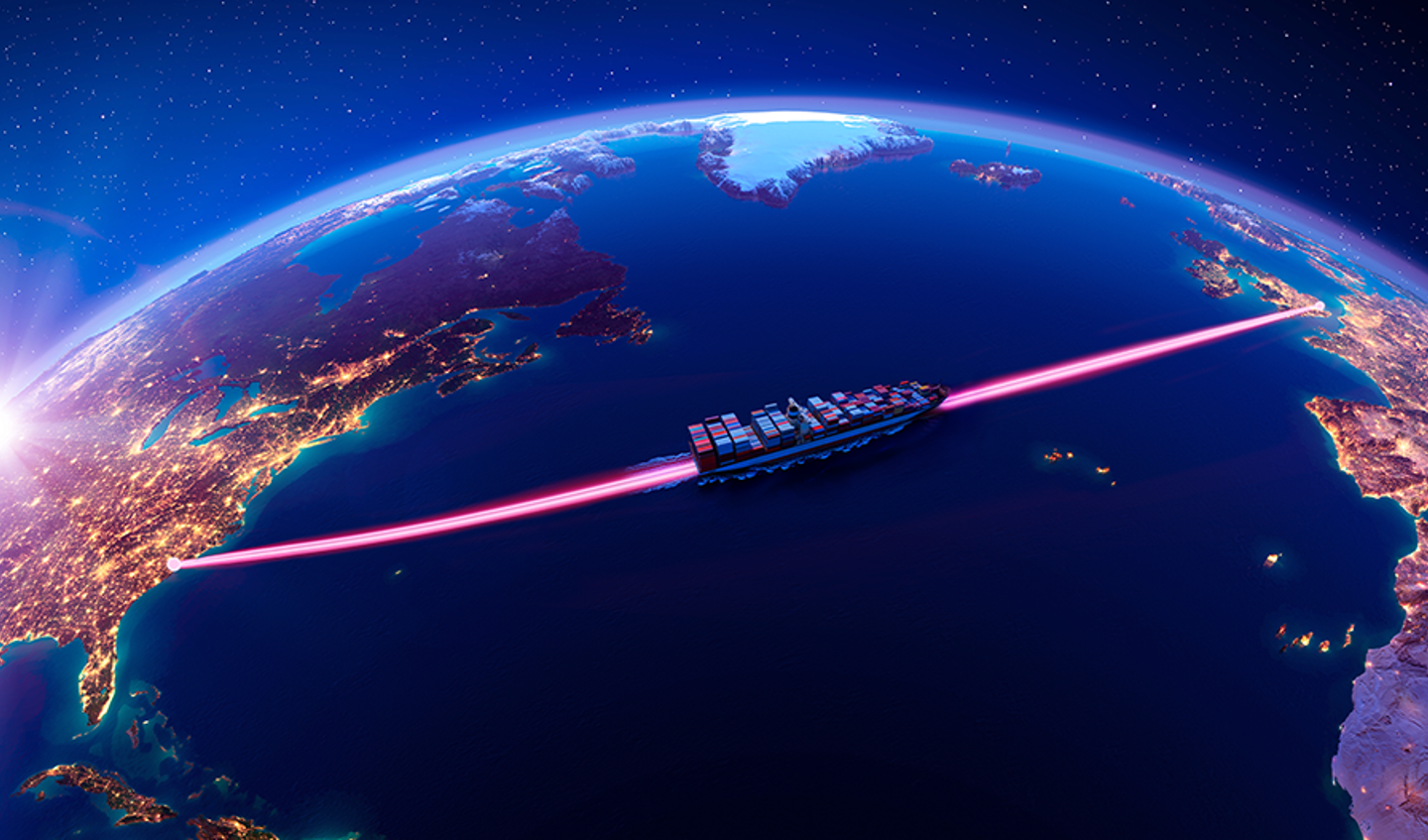
Examining these integration challenges in a defined shipping scenario can help clarify what future deployment would require. Which is why LR announced a joint development project with A.P. Moller - Maersk, the Port of Felixstowe, the Port of Charleston and supported by Global Nuclear Security Partners (GNSP) in September. Known as the Pink Corridor (‘pink’ mirroring nuclear production for pink hydrogen, as an alternative to a Green Corridor approach), it examines the security requirements that would apply to a theoretical nuclear-powered containership operating between the UK and US.
Project partners consider a conceptual nuclear-powered containership in a recognisable commercial scenario, considering port access, ship security, cyber resilience, emergency response, insurance and the interface between maritime and nuclear regulatory expectations.
By bringing together perspectives from shipping, ports and classification, the project is intended to identify gaps and clarify the further work needed before a nuclear maritime corridor could be considered. “The findings are intended to inform future regulation and support the safe, secure and responsible adoption of nuclear power in commercial shipping,” says Tipping.


Preparing ports for nuclear
The Pink Corridor acknowledges the essential role ports will play in the nuclear-maritime ecosystem. “Advanced nuclear has the potential to transform ports from energy consumers into resilient, low-carbon energy and industrial hubs,” said Tipping. “But realising that opportunity will depend on more than technology alone. Ports need to further assess governance, proportionate assurance and early collaboration across the maritime and nuclear sectors.”
Which is why in October, LR and the British Ports Association published Advanced Nuclear Technology Use Within Port Environments. This set out a practical pathway for ports considering nuclear-powered vessels, floating or transportable nuclear power units and land-based small modular reactors or microreactors.
The report argues that ports should begin structured planning now, cautioning against treating nuclear simply as another marine fuel. Regulatory coordination, emergency preparedness, liability, insurance, workforce competence and public confidence will all need to develop alongside the technology.
Moving regulation at the pace of technology
Alongside these projects, LR continues to work through NEMO, the International Association of Classification Societies (IACS), and the IAEA, and engages with the International Maritime Organization (IMO) and wider industry engagement to support the evolving regulatory architectures.
At the IMO, work is underway to revise the Code of Safety for Nuclear Merchant Ships and the associated requirements in SOLAS Chapter VIII. The workplan developed by its Ship Design and Construction Sub-Committee in January 2026 sets out milestones towards a revised framework in 2030.
LR contributes to this process through NEMO. Albrecht, who chairs NEMO's Maritime Regulations Working Group, calls for international regulations and frameworks and real-world projects to progress together. “International engagement is important to develop a more uniform framework, but it isn't the only route to progress. Domestic and regional projects can demonstrate how nuclear technologies work in a marine environment, and the lessons from those projects can then inform wider international development.” Her work through NEMO also supports wider international coordination, with the organisation providing industry input to ATLAS’s six project groups on the frameworks needed for nuclear deployment at sea.
It is a theme connecting much of LR's work in this area and beyond.
ATLAS brings the nuclear and maritime communities together internationally. The Pink Corridor takes a defined shipping scenario and tests it under regulatory and operational regimes. Work with NEMO helps to develop the regulatory conversation with critical input from industry. Together, these activities reflect a shift in the nuclear maritime conversation.
Nuclear technology already operates at sea, but for successful commercial nuclear maritime operations, attention now turns towards the regulatory, operational and assurance architecture that would be required to enable it to do so safely, securely and credibly.
But as Mark Tipping has argued, evidence and openness will ultimately determine whether that transition earns wider confidence: “This isn’t about convincing the public that nuclear is safe; it’s about demonstrating it through evidence and engagement.”
As part of Back Nuclear Energy week that took place, Meg...
