


Lloyd’s Register (LR) has joined a new four‑partner research project to examine how European short‑sea shipping networks can integrate low‑ and zero‑carbon propulsion systems.
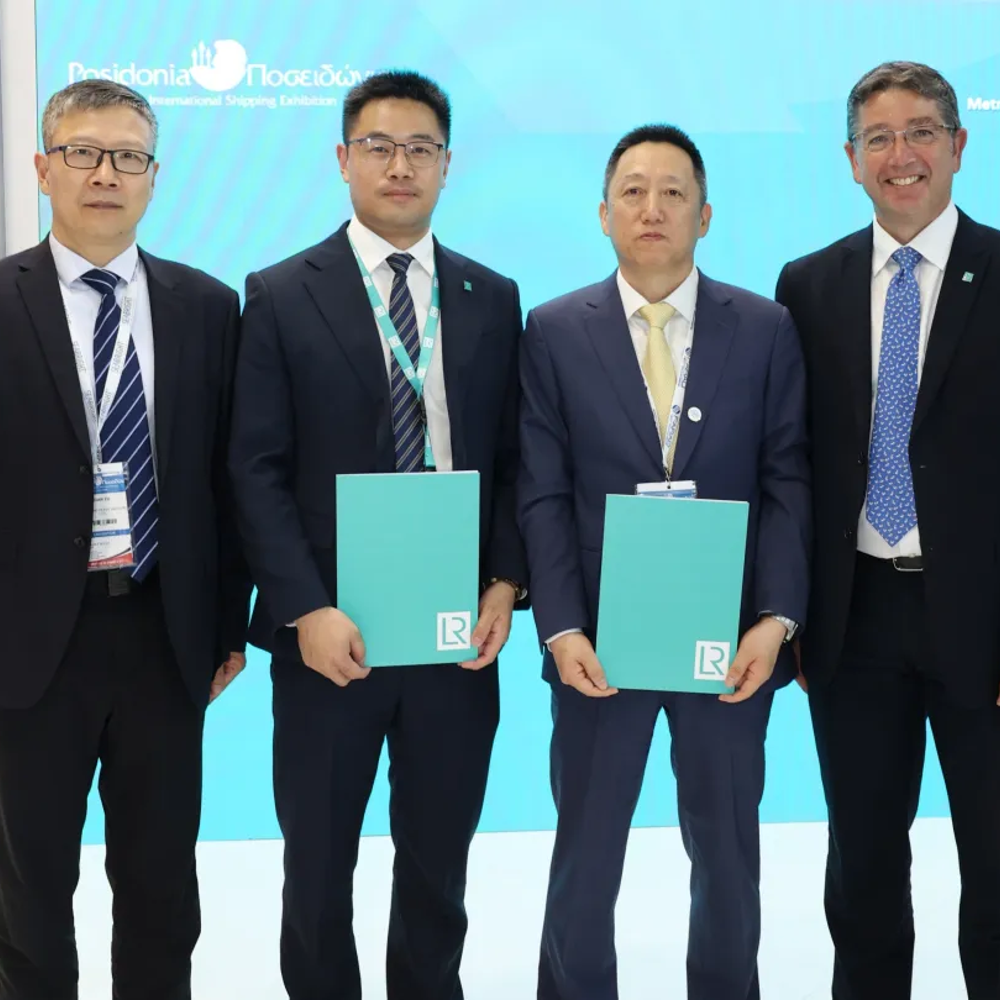
The agreement was signed at a special ceremony during Posidonia in Athens.
The project, delivered with the Shanghai Ship and Shipping Research Institute (SSSRI), Shanghai Jiao Tong University and COSCO Shipping (UK), will analyse operational characteristics of European short‑sea routes, current network layouts, and port infrastructure.
The work centres on the structure of short‑sea networks, recognising that decarbonisation will depend as much on how routes are configured as on the technologies ships adopt.
The findings will be used to develop technical pathways for optimising route networks and supporting the integration of new energy solutions, with a focus on delivering outputs that shipowners and operators can apply as regulatory pressure increases across Europe.
As a core unit within COSCO Shipping’s technology and manufacturing division, the SSSRI has decades of expertise in maritime innovation. With a strong focus on green and intelligent shipping, the institute leads pioneering studies on sustainable fleet transformation, network optimisation, and clean energy applications, positioning itself as a key driver of China’s maritime technology advancement.
This collaboration marks a new chapter in LR’s partnership with SSSRI, Shanghai Jiao Tong University, and COSCO Shipping. Together, the parties will continue to deepen cooperation in areas such as zero‑carbon technology validation, industry standards development, commercialisation of research outcomes, and demonstration projects for green shipping.
Tianxiang Li, President for Greater China, Lloyd’s Register, said: “Short‑sea shipping will not decarbonise through technology alone, it will depend on how entire transport networks are designed and operated. This project is about understanding where those systems need to change, not just what fuels ships might use, and giving the industry a clearer, more practical route to making that transition happen at scale.”


